Calculation of SBTi targets
The Science Based Targets initiative offers companies two methods for setting emission reduction targets. SBTi also distinguishes between short-term and long-term targets. The size and type of company determine which scenario should be chosen.
Absolute Contraction Approach (ACA)
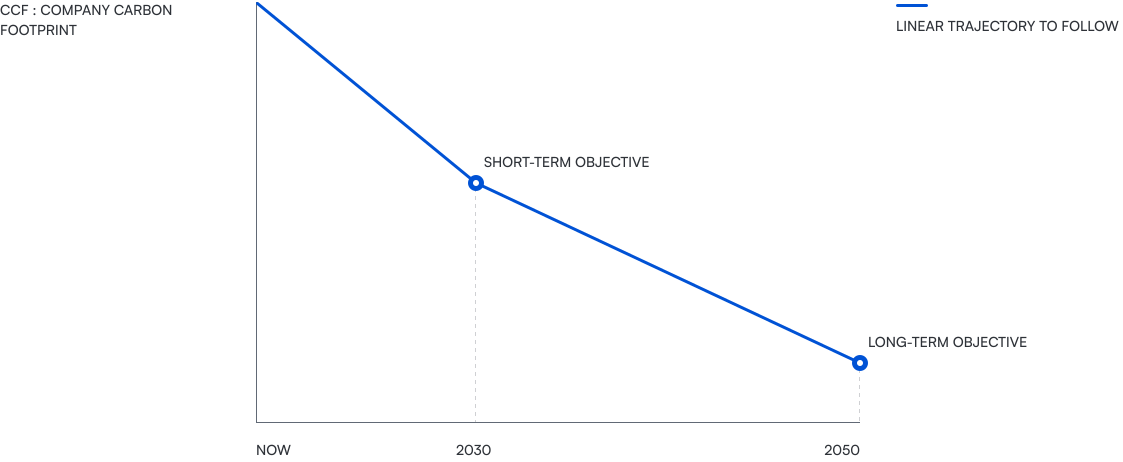
The ACA method calculates a percentage reduction for all the company's activities, leading to a linear reduction trajectory. Each company must reduce its emissions at the same rate.
Who can apply the ACA method ?
All companies, with the exception of those operating in the fossil fuel sector, can set targets using the ACA method.
How are targets calculated ?
Short-term objectives: companies must reduce their total emissions by 42% by 2030 on a straight-line basis.
Long-term objectives: companies must reduce their total emissions by 90% by 2050 compared with the base year.
Sectoral Decarbonization Approach (SDA)
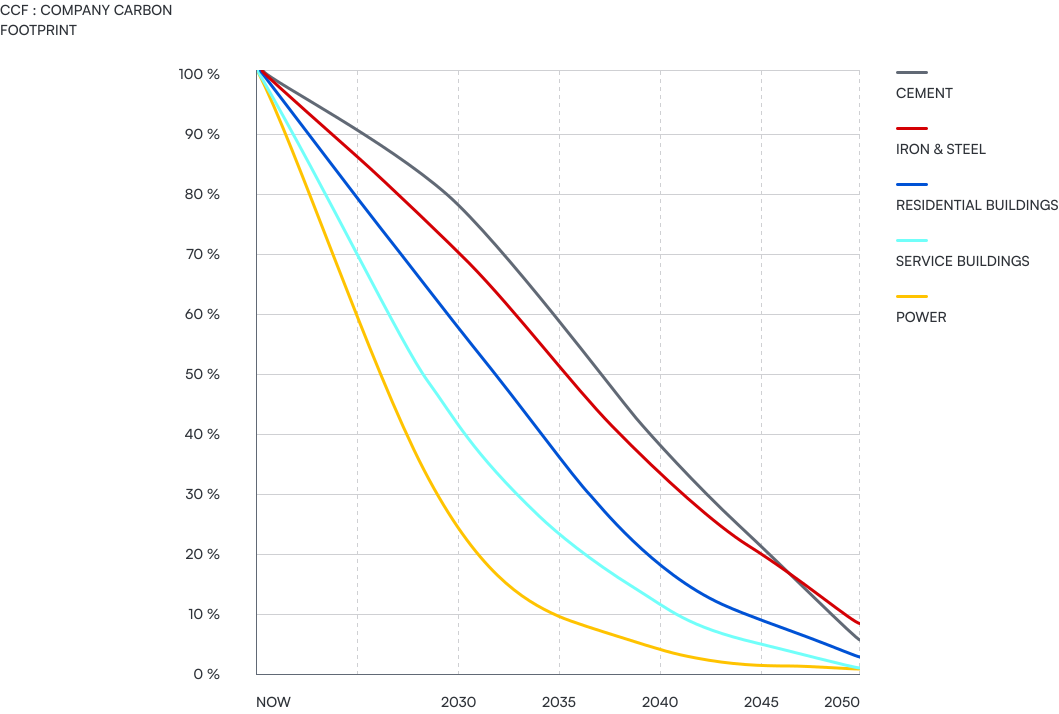
The reduction trajectory of the SDA method depends on the industrial sector in which a company operates. It takes into account the individual challenges of reducing emissions in the company's various activities, such as energy or transport.
How are targets calculated ?
The SDA method calculates intensity targets (emissions per unit of activity, for example tCO2 per kWh of energy produced). Once the right sector has been identified, targets are calculated to converge over time towards a sector-specific reduction trajectory.
Who can apply the SDA method ?
The SDA method can currently be applied to the following sectors* :
- Aviation
- Building
- Cement
- Financial Institutions
- Forestry, Land and Agriculture (FLAG)
- Land transport
- Maritime transport
- Steel
- Clothing and footwear
- Chemical products
The method is also being developed for the following sectors* :
- Oil and gas
- Energy
* last updated on 05.01.2026